Our research group studies how plants respond to global environmental changes, including rising CO2, warming, and shifts in water availability, with a particular interest in how these changes affect ecosystem carbon and water cycles. We integrate multiple observation data streams — from manipulation experiments, eddy covariance, and satellite data — with vegetation models and statistical methods to advance process understanding and improve predictions of future ecosystem change.
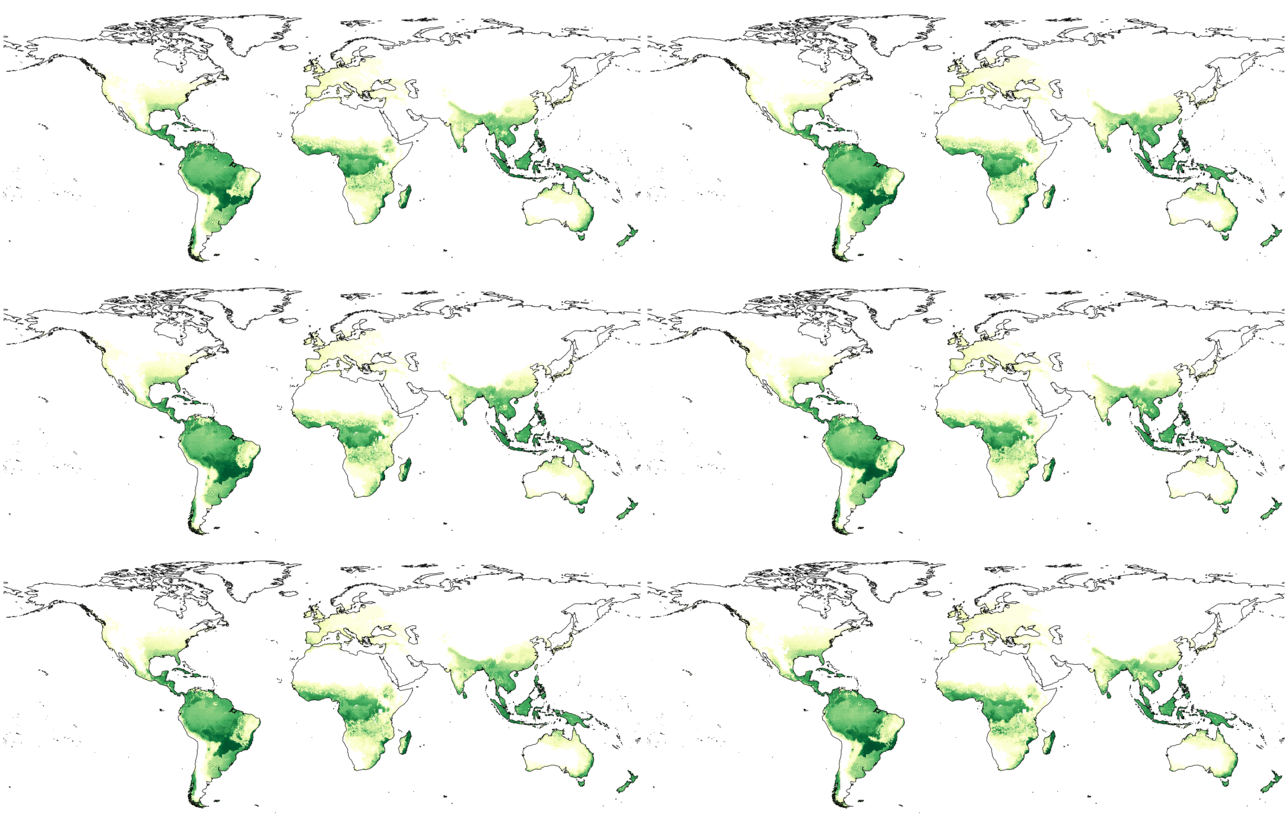
We tackle a diverse range of questions that connect terrestrial ecosystems with climate, including:
Plant function, stress, and disturbance dynamics:
- How will plants acclimate and adapt to rising atmospheric CO2 concentrations?
- To what extent can plants adjust their physiology and function under environmental stress?
- Can we predict when and where trees will die during droughts?
- How do changing disturbance regimes shape forest structure, function and resilience?
- How do past environmental conditions influence ecosystem resilience to droughts and heatwaves?
Ecosystem and climate feedbacks:
- How does plant function regulate land–atmosphere feedbacks during climate extremes?
- How will vegetation responses to environmental change alter the terrestrial hydrological cycle?
Biogeography and future landscapes:
- How resilient are species distributions to climate change, and how will they shift in the future?
- How effectively can nature-based forest restoration mitigate the impacts of droughts and heatwaves?
- Which species should we plant in future landscapes and cities to enhance climate resilience?
Modelling is a central tool used by our research group for understanding, disentangling, and projecting how climate change will shape future vegetation-atmosphere dynamics. We use models spanning a range of complexity, from simple (GDAY), to the more complex: stand (MAESPA), land surface (CABLE, JULES), dynamic vegetation (LPJ-GUESS) and coupled-climate (ACCESS) models.
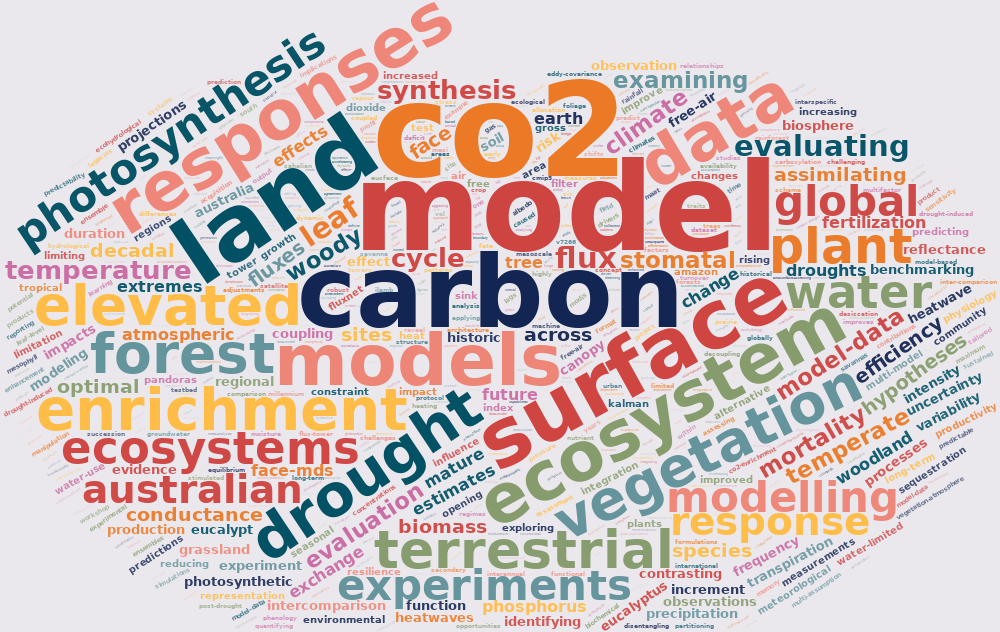
“The method of science depends on our attempts to describe the world with simple theories: theories that are complex may become untestable, even if they happen to be true. Science may be described as the art of systematic over-simplification-the art of discerning what we may with advantage omit” - Karl Popper